


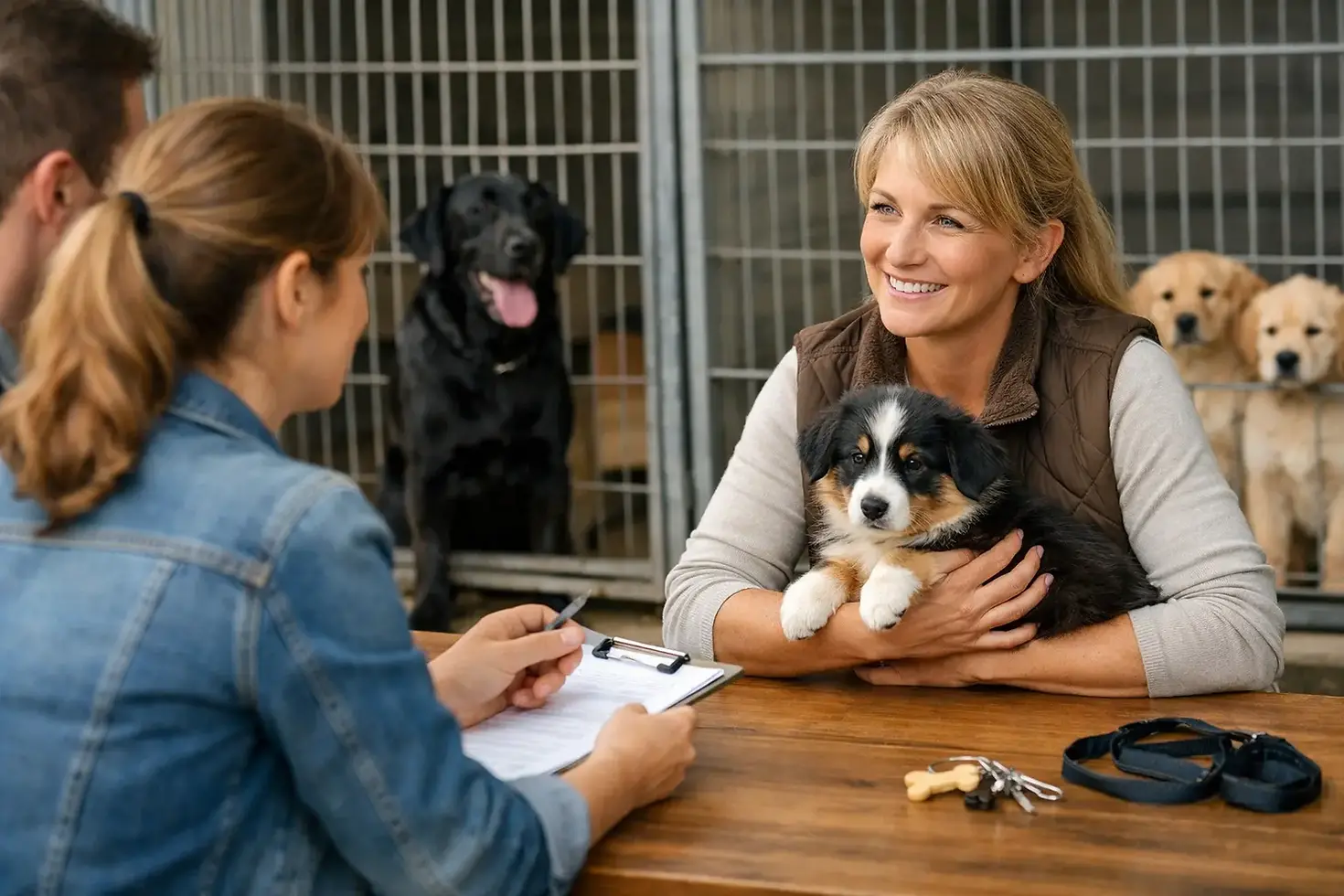
Best Questions for Dog Breeder Visits Before Buying

A lovely puppy can make any conversation feel emotional very quickly. But the decision you make before bringing one home will shape the next 12 to 15 years of family life. Searching for the best questions for dog breeder conversations is a sensible first step, because a reputable breeder should welcome thoughtful questions and answer them openly.
For families looking for an Australian Labradoodle, the aim is not to find a breeder who gives the quickest or most reassuring answer. It is to find one whose approach to health, temperament, puppy care and lifelong support gives you genuine confidence. The right questions help you look beyond photographs and availability, and towards the standards behind the puppy.
Why good breeders expect good questions
Responsible breeding is planned long before puppies arrive. It involves choosing suitable parents, completing relevant health testing, considering temperament, raising puppies in a safe environment and carefully matching each puppy to an appropriate home.
A breeder who takes this seriously will not be offended by questions about their licence, testing or contracts. In fact, they should be pleased that you are approaching ownership with care. They may also ask plenty of questions about your household, working routine, children, previous dog experience and plans for exercise and training. This is not a barrier to buying a puppy. It is part of making sure every puppy has the best possible start.
The best questions for dog breeder visits
You do not need to arrive with an interrogation checklist. A relaxed, honest conversation is usually far more useful. However, these areas should be covered before you reserve a puppy or make a final commitment.
Are you licensed, and can I see where the puppies are raised?
In England, dog breeders meeting certain criteria must be licensed by their local authority. Ask whether the breeder is licensed, what rating they hold and whether you can see their licence details. A 5 Star Council Licensed Breeder rating is a meaningful indication that high standards of animal welfare and breeding practice have been assessed.
A visit also matters. You should expect a clean, warm and suitably managed environment where the puppies are comfortable and cared for. Homes vary, and not every breeder’s set-up will look identical, but the puppies should appear settled, alert and well handled. Be wary if you are pressured to meet in a car park, offered delivery without a proper conversation, or prevented from seeing where the puppies have been living.
There can be sensible limits around visits, particularly for very young litters or when infection control is necessary. A careful breeder may arrange viewing at an appropriate age rather than allowing unrestricted access. What matters is that they explain their process clearly and do not use biosecurity as a vague reason to hide the puppies’ environment.
What health testing have the parents had?
This is one of the most valuable questions you can ask. Australian Labradoodles are a carefully developed breed with their own health considerations, so broad assurances that parents are simply “healthy” are not enough. Ask which tests have been completed, why they are relevant to the breed and whether the breeder can explain the results.
Depending on the breeding lines, this may include testing relating to hips, elbows, eyes and inherited conditions. A responsible breeder should be able to discuss the health profile of both parents in straightforward language, provide supporting documentation where appropriate and explain how results inform their breeding decisions.
Health testing reduces risk; it does not create a guarantee that a dog will never become unwell. That distinction is worth understanding. Honest breeders will not promise a perfect future, but they will show that they have taken sensible, evidence-led steps to give puppies strong foundations.
Can I meet the mother, and what are the parents like in temperament?
Meeting the mother gives you a useful picture of her temperament, although she may naturally be protective or more tired while caring for a litter. Ask how she is in everyday life, how she responds to people and other dogs, and what qualities were considered when she was paired with the sire.
You may not always meet the father in person, especially if he lives elsewhere. In that case, a good breeder should still be able to tell you about him and explain why he was selected. For family companion dogs, temperament is not an afterthought. A calm, friendly, people-focused nature is one of the reasons many families are drawn to multi-generational Australian Labradoodles.
How are the puppies socialised before they leave?
The early weeks are a major learning period. Puppies benefit from gentle, age-appropriate exposure to normal household sights, sounds, surfaces and handling. Ask what experiences the litter has had and how these are introduced without overwhelming them.
Good socialisation is not about keeping a puppy busy every moment of the day. It is about creating positive, carefully managed experiences and allowing plenty of time for sleep and rest. You may want to ask whether puppies have been introduced to household noises, grooming, car travel, visitors, different floor surfaces and early toileting routines.
The breeder should also be realistic. Early work gives a puppy a helpful start, but its new family must continue socialisation steadily after collection. Puppy classes, calm visitors and gradual exposure to the wider world all have a part to play.
How do you match puppies to homes?
It is understandable to have a favourite puppy from photographs or a first visit. Yet the puppy that catches your eye may not always be the best match for your household. Ask how the breeder assesses each puppy’s developing character and whether they guide families towards a suitable fit.
For example, an active household may suit a confident, outgoing puppy, while a first-time owner may value a pup with a more settled nature. Coat colour, markings and gender can matter to some families, but temperament, size expectations and lifestyle compatibility deserve greater weight. A breeder who takes time over matching is protecting both the puppy and the family.
What will the puppy have received before collection?
Ask for a clear explanation of what is included when your puppy leaves. This should cover veterinary checks, microchipping, worming and flea treatment where applicable, feeding information, insurance arrangements if offered, documentation and a written contract.
It is also useful to ask what food the puppy is currently eating, what routine it follows, and whether you will receive guidance on settling in, toilet training, sleep and early training. A well-prepared handover prevents avoidable stress during those first few days at home, when both puppy and family are adjusting.
What support do you offer after the puppy goes home?
The relationship should not end at collection. Puppies can take time to settle, and new owners often have practical questions about feeding, crate training, mouthing, sleep or the first visit to the vet. Ask how and when you can contact the breeder after bringing your puppy home.
Also discuss the contract carefully. It should be clear, fair and explained rather than rushed. Ask about any guidance relating to neutering, breeding restrictions, insurance, returns or what happens if your circumstances change. Responsible breeders care about the long-term welfare of the dogs they breed and should be prepared to help if a family faces genuine difficulty.
Questions that deserve a fuller answer
Some answers are not simply right or wrong. For instance, a breeder may not allow puppies to leave until a particular age because they believe more time with the litter supports development. Another may ask you to wait for the right litter rather than offering immediate availability. These can be signs of care, not inconvenience.
Similarly, a waiting list is not automatically proof of quality, and immediate availability is not automatically a concern. The useful question is how the breeder plans litters, assesses demand and makes sure each puppy is placed thoughtfully. Look for consistency between what they say, the records they hold and the care you can see.
Price should be approached in the same way. A lower price may appear attractive, but it can leave unanswered questions about health testing, licensing, puppy care and support. A responsibly bred puppy reflects the considerable work that happens before and after a family first meets the litter.
Make space for your own circumstances
The best breeder will want an honest picture of your life, so be ready to discuss it. Consider how long the puppy will be left alone, who will manage school-run mornings, whether you can commit to grooming and training, and how a dog fits with holidays, older pets or young children.
Australian Labradoodles are affectionate, intelligent companion dogs, but every dog needs time, consistency and companionship. No breeder can make the commitment for you. They can, however, help you begin with realistic expectations and the right information.
At Diamond Lane Doodles, we believe the right puppy home is built on open conversation, not pressure. Ask the detailed questions, take time to reflect on the answers, and choose the breeder whose care for their dogs is as clear as their enthusiasm for placing a puppy with your family.


Comments